№ 08The Faculty
Catriona MacIntyre.
Leadership Coach, MacIntyre Practice, Edinburgh.
On the senior practitioner as a group of one.
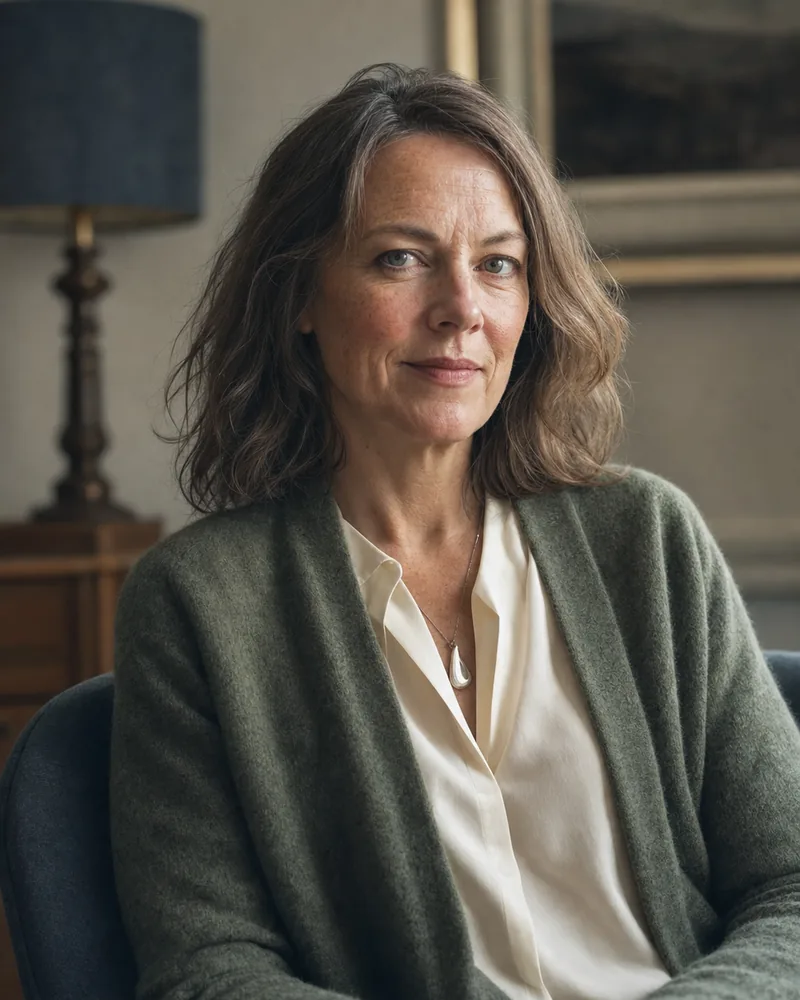
A senior practitioner is, most of the time, a group of one. The coaching is the second person in the room.
The work
Catriona runs MacIntyre Practice, a leadership coaching firm of three people in Edinburgh that works almost exclusively with senior practitioners in public-interest organisations: hospital chief executives, university registrars, the heads of national agencies. She takes eight standing engagements at any given time. She runs the four-day Slow Retreat in the Cotswolds in July with Padraig Whelan and writes one long essay a year on coaching practice for a small Edinburgh journal.
Background
She trained as a clinical psychologist in Edinburgh and Glasgow, ran a busy NHS clinic in the central belt for eight years, and then moved out of clinical practice in 2014 to do something else with the training. She does not call what she does therapy and she will not let her clients call it that. It is coaching, in a specific old-fashioned sense: the work is the conversation and the conversation is structured.
The practice is named after her grandfather, who was a teacher in Argyll for forty-one years and who taught her, very early, to listen without interrupting for the first three sentences of any answer. She has not knowingly interrupted, in a professional setting, since 2009.
Signature contribution
Catriona is known for the working unit. Senior practitioners, she will say, come to coaching after years in which they have been a group of one: the one person in the room who is supposed to know what to do. The job of the coaching is not to teach them anything new, because they know enough. The job is to give them the company of a single careful listener for an hour, twelve times a year, so that they can think.
She is also known for the Slow Retreat, which she has run with Padraig Whelan in a private house in the Cotswolds every July since 2019. Eighteen people, four days, no slides, two long walks. The waiting list is two years. She answers letters from prospective attendees by handwritten card.
In practice
On a Tuesday morning Catriona is fifty minutes into a conversation with a hospital chief executive who has just told her, for the third time, the story of the week the chief medical officer resigned. She has not said the words I think this back to them. She has noted, on a small index card, three small things that have changed in the executive’s account since the last session. She will tell them, in the final ten minutes, what the three small things were.
The job is not to know the answer. The job is to be patient enough that the answer the client has been working on for six months can come out.
Outside the work
She lives in a flat in Stockbridge in Edinburgh and walks the Water of Leith most mornings. She has two grown sons, one of whom is a teacher in Glasgow, and a small black dog. She reads novels in long stretches and biographies in small ones, and is the only member of the faculty who has, in print, acknowledged a debt to her grandmother.
If you have not interrupted for three sentences, you have done most of the work the conversation needed.